
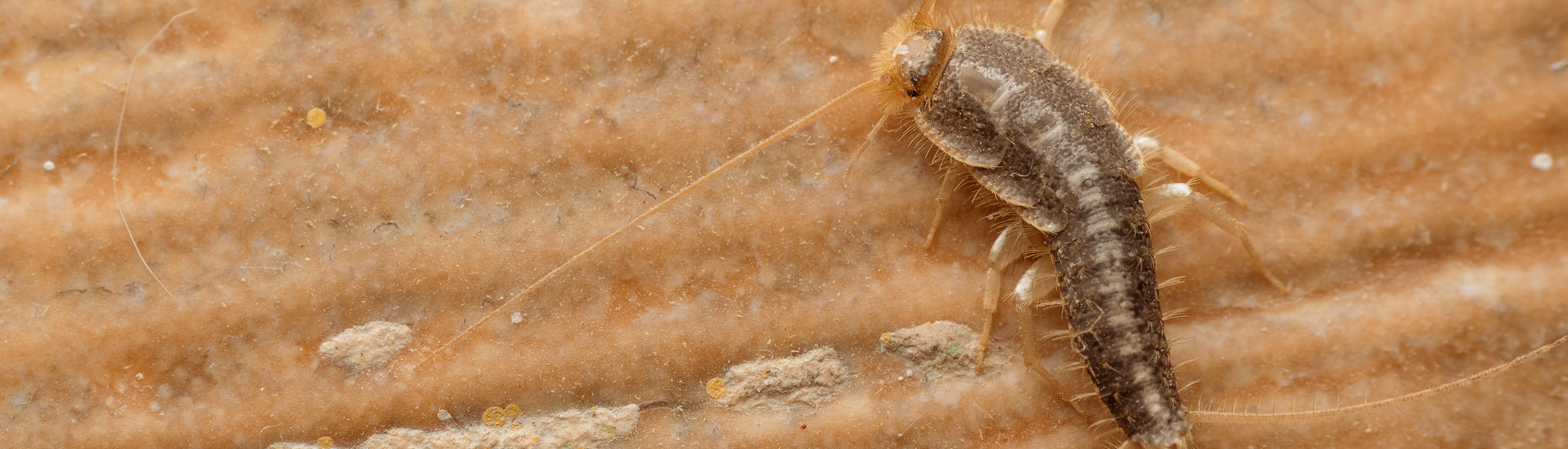
SILVERFISH CONTROL
Silverfish are the pest you usually meet in the worst way: a box of old photographs, a stack of wedding paperwork, a book off the shelf that’s been chewed around the edges. They eat paper, glue, and starch; they work in the dark, and they’ve usually been at it a while before anyone notices.
SILVERFISH CONTROL,
DONE THE NINEFOLD WAY
- We treat where they hide: Silverfish stay in tight, dark spaces: wall voids, under insulation, behind baseboards, and in stored books and boxes. We treat those spots rather than the floor you spotted one on.
- We find what’s keeping it humid: Silverfish need damp air to survive. Your technician checks the spots that hold it, like bathrooms, kitchens, laundry areas, and crawlspaces, and tells you what’s causing it.
- We keep at it: Silverfish are long-lived and slow to mature, so a population builds quietly over years rather than weeks. Regular service catches them before the damage does.
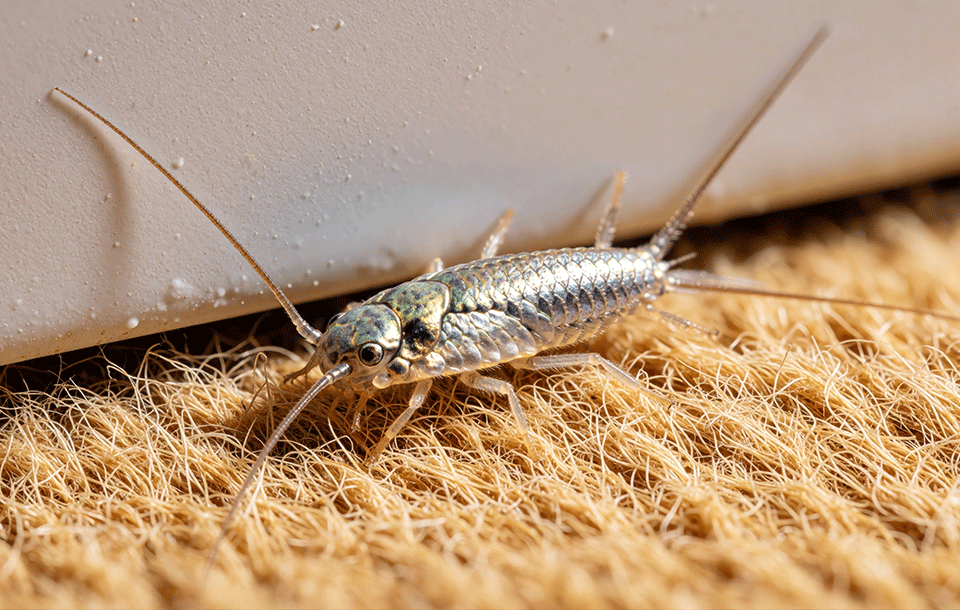
WHY SILVERFISH SHOW UP
Humid air: Silverfish need damp air to live, doing best between roughly 75 and 95 percent humidity. A bathroom without a working fan, a laundry room, or a crawlspace that never dries out will hold them indefinitely.
Something starchy to eat: Book bindings, wallpaper paste, cardboard, stored papers, and starch in clothing are all food. Feeding shows up as irregular chewed patches rather than clean holes.
A box carried in: Silverfish travel in cartons of books and papers from a damp basement, garage, or storage unit. They also turn up in new construction, where fresh plaster and green lumber keep the walls damp.
HOW IT WORKS
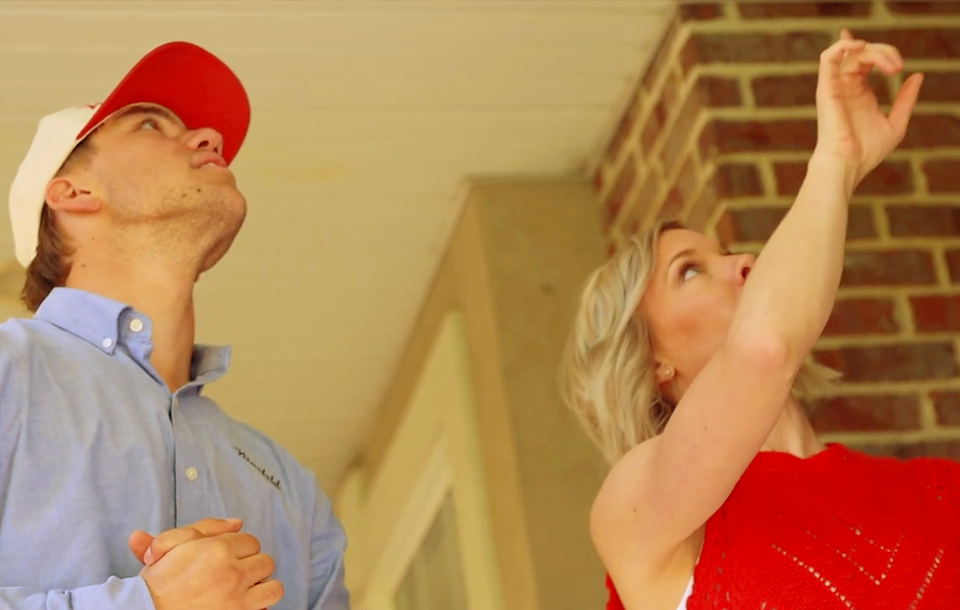
INSPECT
Your technician starts with a conversation, then walks your property to find activity, entry points, and risks worth watching.
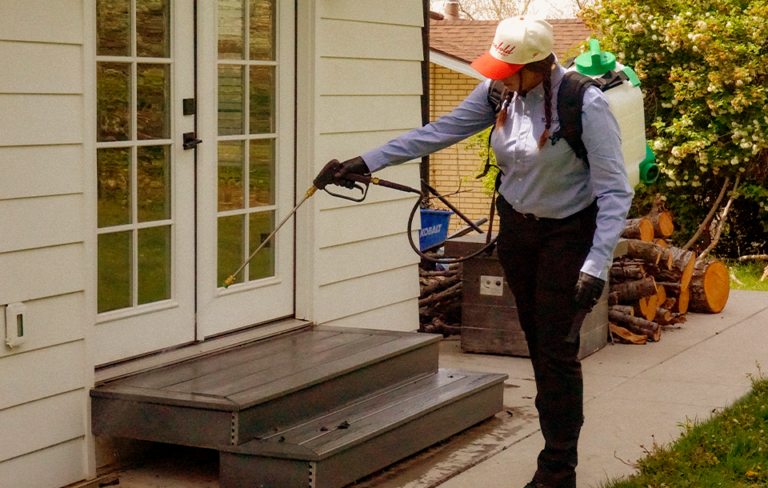
PROTECT
Webs and nests come down, the foundation and key areas get treated, entry points are addressed, and the interior is treated as needed.

PROVE
Before leaving, your technician recaps the visit. Afterward, you get a video of the service, backed by our Worry-Free Guarantee.
FREQUENTLY ASKED QUESTIONS
No. Silverfish don’t bite, sting, or carry disease. They lack the mouthparts to break skin, and they have no interest in people. The damage they do is to your belongings, not to you.
Take away the humidity first, since they can’t survive long without it. A dehumidifier, a working bathroom fan, and repaired leaks do most of the work. From there, clear out old cardboard and paper storage, move keepsakes into sealed containers, and treat the cracks and voids where they spend the day. Store-bought traps catch individuals but won’t reach a population living inside a wall.
Paper and anything starchy. Book bindings, wallpaper paste, stored documents, photographs, cardboard, and fabric are all on the menu, with linen being a favorite. The feeding shows up as irregular chewed patches and yellowish staining rather than clean holes, which is why people often blame age or damp before they suspect an insect.
Usually from somewhere damp, either outdoors or another part of the house. They also arrive in boxes of books and papers brought in from a basement, garage, or storage unit. New construction is its own case, since fresh plaster and green lumber keep walls damp enough to support large numbers.
Longer than you’d guess. Silverfish are nocturnal; they hide during the day, and they can live several years, so a population builds slowly and quietly. By the time one turns up in the open, they’ve usually been in the walls or the storage boxes for a while.
GET STARTED TODAY!
GET A FREE QUOTE
Quiet, hidden, and eating your paperwork. Let’s fix that. Tell us a little about your property, and we’ll send a free, no-obligation quote. No hidden fees, no confusing contracts, just a clear price for your home. Fill out the form, and we’ll take it from there.