
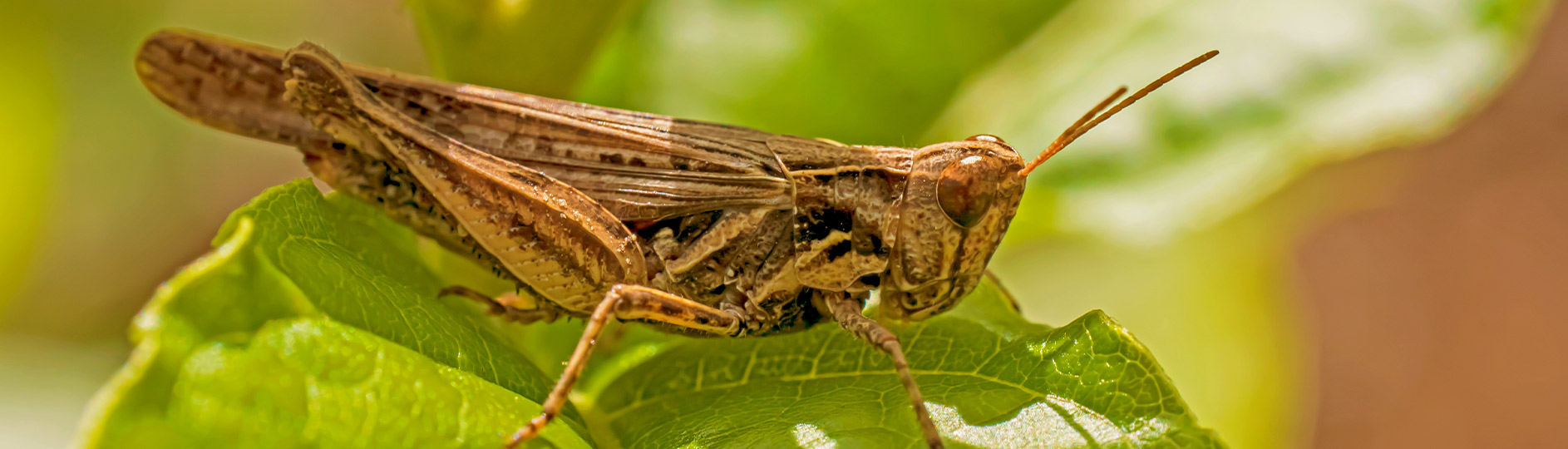
CRICKET CONTROL
One cricket in the house can keep a whole family awake. They chirp from somewhere behind the dryer or under the stairs, go quiet the second you walk in, and start again the moment you lie down. Crickets are outdoor insects that wander in by accident, usually in late summer, and the ones that stay will chew on fabric and paper while they’re at it.
CRICKET CONTROL,
DONE THE NINEFOLD WAY
- We start outside: Crickets come in from the yard, so the work starts there. We treat the foundation and the damp, sheltered spots along it where they gather before they find a way in.
- We close the doors they use: Gaps under exterior doors, garage thresholds, window wells, and utility openings are the usual routes. Your technician addresses the ones your house has.
- We treat where they hide: Basements, garages, laundry rooms, and crawlspaces are where they end up. Treatments go along baseboards and in the low, dark spots they settle into.
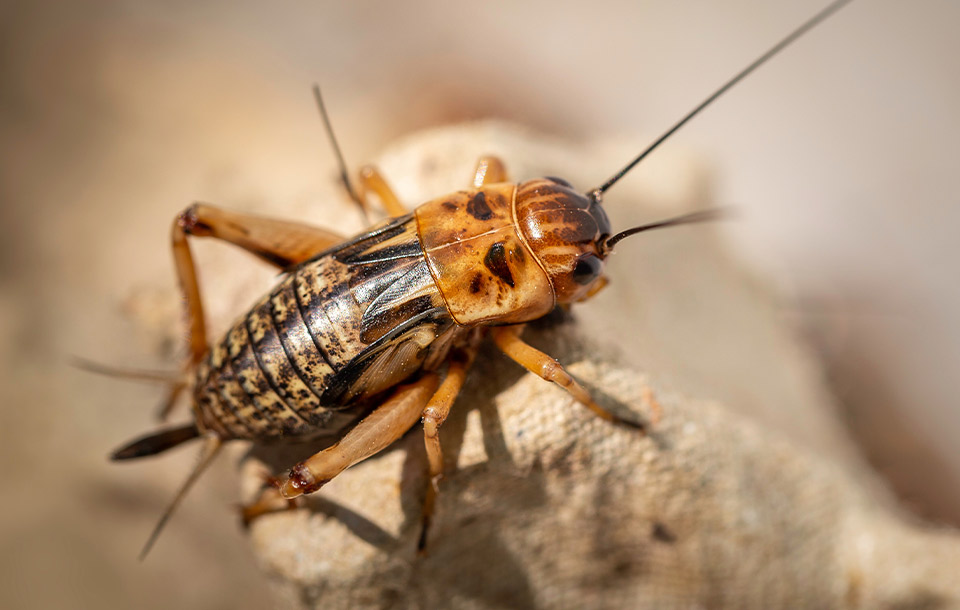
WHY CRICKETS COME INSIDE
Light after dark: Crickets are drawn to porch lights, garage lights, and lit windows, which is how they end up massed by the front door on a summer night. It’s a short trip in when someone opens it.
Cool, damp cover: Mulch beds, tall grass, and woodpiles give them somewhere to shelter during the day. The closer that cover sits to the house, the shorter the walk to your foundation.
A change in the weather: Most crickets come inside in late summer and fall, when it cools off outdoors. Heavy rain moves them too, and your garage is right there.
HOW IT WORKS

INSPECT
Your technician starts with a conversation, then walks your property to find activity, entry points, and risks worth watching.
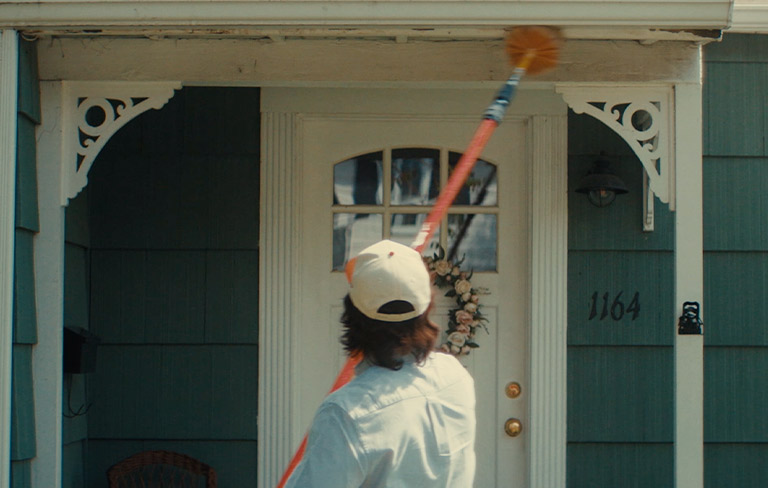
PROTECT
Webs and nests come down, the foundation and key areas get treated, entry points are addressed, and the interior is treated as needed.

PROVE
Before leaving, your technician recaps the visit. Afterward, you get a video of the service, backed by our Worry-Free Guarantee.
FREQUENTLY ASKED QUESTIONS
You have to find the cricket, and that’s the hard part, since they go quiet when anything comes near, and the sound bounces in a way that makes direction hard to judge. Rather than hunting one down, the practical fix is making the house unwelcoming: treat the entry points and the areas they hide in, and cut down the damp, dark spots they settle into. That handles the one you’re hearing and the ones you aren’t.
They can, though it takes a while. Crickets chew on fabric and paper, with silk and wool being the usual casualties, along with stored clothing, curtains, and cardboard. One cricket won’t do much. A population that has settled into a basement or storage room over a season is a different matter.
Because treatment drives them out of hiding before it finishes them off. The first week or two often brings more sightings, not fewer, and many of the roaches you see are already dying. Egg cases are the other reason, since they’re protected and hatch later, which is why one visit rarely ends it. What matters is the trend: fewer each week means it’s working.
Seldom, and it’s not something to worry about. Crickets aren’t aggressive and don’t go after people. Even in the rare case one does nip, it’s superficial, and they aren’t known to spread disease to humans.
Late summer and early fall are when they move. Crickets breed outdoors through the summer, and when nights cool off, the whole population starts looking for somewhere warmer, which is your foundation, your garage, and any gap they can find. A heavy rain can trigger the same rush.
House crickets can. They’re the ones that will live and breed inside, which is how a single chirp in September turns into a steady problem by winter. Field crickets and camel crickets typically wander in and die off without establishing, but the sound is just as annoying while they last.
Sometimes. Crickets are food for spiders and centipedes, so a steady cricket population can draw those in behind them. If you’re hearing crickets and also finding webs in the corners, the two are probably connected, and treating the whole picture works better than treating one pest at a time.
GET STARTED TODAY!
GET A FREE QUOTE
Ready for a quiet night again? Tell us a little about your property, and we’ll send a free, no-obligation quote. No hidden fees, no confusing contracts, just a clear price for your home. Fill out the form, and we’ll take it from there.