

BEETLE CONTROL
Beetle covers a lot of ground. Some eat their way through wool sweaters. Some turn up in the flour. Some wander in from the yard and die on the basement floor. And every fall, boxelder bugs and stink bugs gather on the sunny side of the house looking for a way in. What you do about it depends entirely on which one you’ve got.
BEETLE CONTROL,
DONE THE NINEFOLD WAY
- We identify first: Your technician figures out what you’re actually dealing with, because a beetle in the pantry and a beetle in the closet call for two different treatments.
- Inside and out: Pantry beetles need different handling than the ones coming in from the yard, so we treat where the problem actually is, not just around the perimeter.
- Built to stay ahead: Fall is when the clustering starts. Regular service builds the barrier before they gather, not after they’re in the window frames.
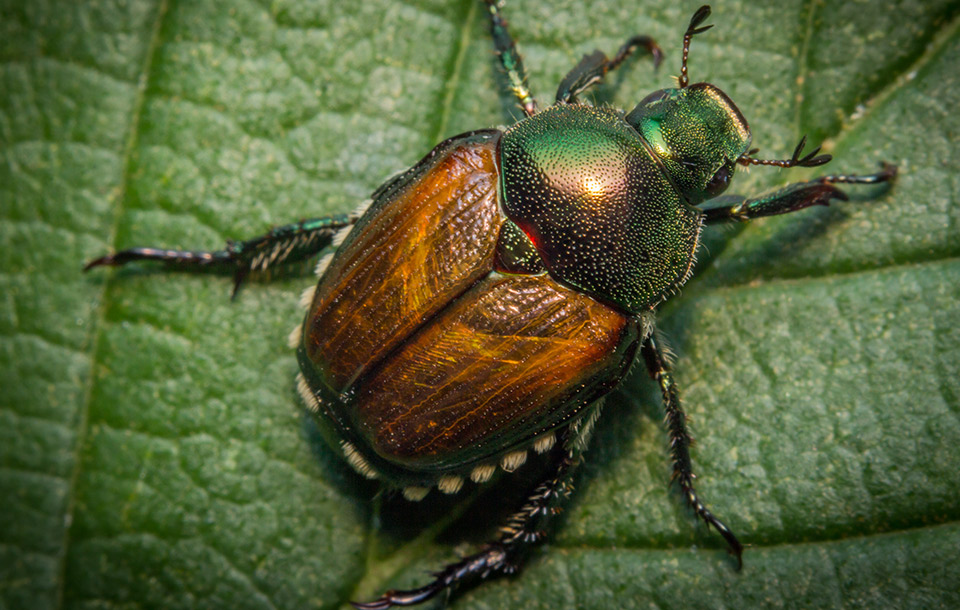
WHY BEETLES GET INSIDE
Out of the pantry: Beetles often arrive in something you carried home. A bag of flour, a box of cereal, or a container of birdseed can hold eggs you’d never see.
Out of the closet: Carpet beetles feed on wool, felt, and other natural fibers. They turn up in stored clothing, under furniture, and along carpet edges, and the damage shows before the beetle does.
In from the yard: Ground beetles come in under doors and through foundation gaps after rain. Boxelder bugs and stink bugs gather on sunny walls in fall, then slip inside to wait out the cold.
HOW IT WORKS

INSPECT
Your technician starts with a conversation, then walks your property to find activity, entry points, and risks worth watching.

PROTECT
Webs and nests come down, the foundation and key areas get treated, entry points are addressed, and the interior is treated as needed.

PROVE
Before leaving, your technician recaps the visit. Afterward, you get a video of the service, backed by our Worry-Free Guarantee.
FREQUENTLY ASKED QUESTIONS
Carpet beetles don’t bite people or pets, and they don’t spread disease. What some people mistake for bites is an allergic reaction to the tiny hairs the larvae shed, which can cause itchy red bumps. Those bumps get confused with bed bug bites often, so if you’re not sure which you’re dealing with, your technician can tell the difference.
Carpet beetles feed on natural fibers, so wool, silk, leather, cotton, and feathers are all fair targets. It’s the larvae doing the damage, not the adults, and it usually shows up as bare patches in a rug or holes in stored clothing. Because larvae can go a long time without food, an infestation often goes unnoticed until the damage appears.
They were probably already in it. Pantry beetles come home in packaged flour, cereal, rice, and birdseed, then spread to other packages in the same cabinet. Treating the cabinet alone won’t fix it, since the source has to be found and thrown out first.
Those are usually boxelder bugs or stink bugs rather than beetles, and they’re doing exactly what it looks like: soaking up heat on the sunny side of the house before the weather turns. From there, they work into window frames, siding gaps, and attics to wait out winter, which is why fall service focuses on sealing them out before they settle in.
Sometimes. Vacuuming thoroughly and washing infested fabrics in hot water kills eggs and larvae, and that’s enough for a small problem caught early. If holes keep appearing after that, or you’re finding larvae in more than one room, the source hasn’t been found yet. That’s what we’re for.
They can, since most beetles come in from outside or ride in on something you bought. Regular service keeps a barrier up around the house, and your technician will tell you what to watch for in the pantry and the closet.
GET STARTED TODAY!
GET A FREE QUOTE
Holes in your favorite sweater? Tell us a little about your property, and we’ll send a free, no-obligation quote. No hidden fees, no confusing contracts, just a clear price for your home. Fill out the form, and we’ll take it from there.