
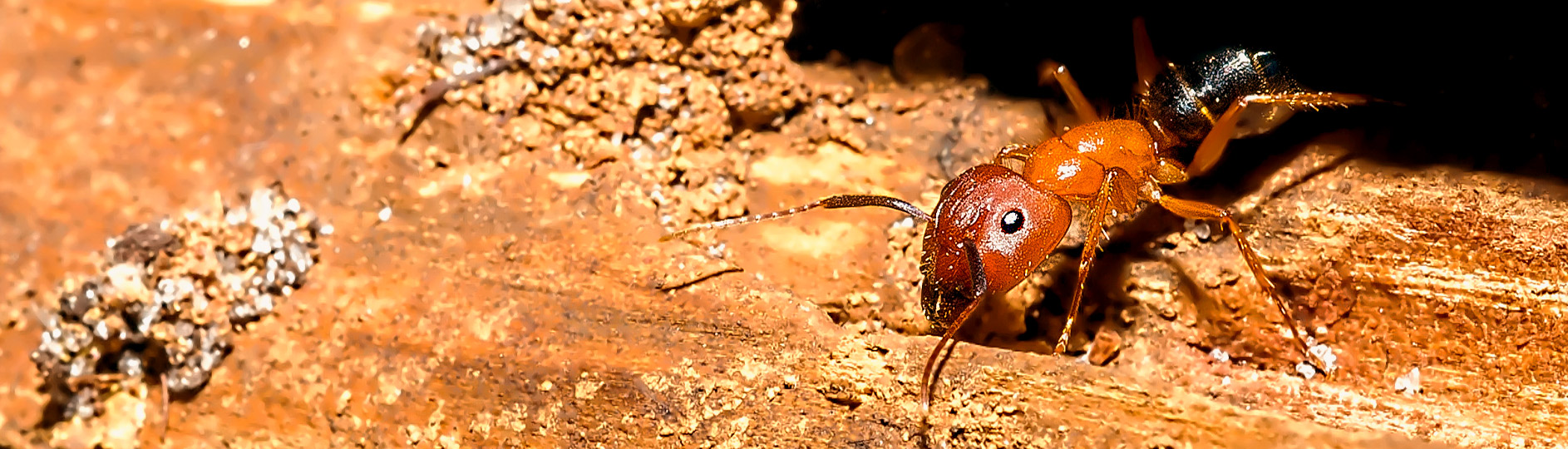
CARPENTER ANT CONTROL
Carpenter ants don’t eat wood. They hollow it out to nest in, and they go for wood that’s already damp or damaged, which means they usually show up where water has been getting in. Finding them is only half the job. Finding out why they picked your house is the other half.
CARPENTER ANT CONTROL,
DONE THE NINEFOLD WAY
- We find the nest, not just the ants: A carpenter ant problem usually means two nests, one inside and a parent colony outdoors. Treating what you can see leaves the rest of the colony working.
- We look for the water: Damp wood is what draws them, so your technician checks for the leak, the gutter, or the rotted trim behind it, then tells you what needs fixing.
- We know the difference: Carpenter ant damage and termite damage don’t look the same, and mistaking one for the other costs you time and money. Your technician can tell you which you’re dealing with.
CARPENTER ANT CONTROL, DONE THE NINEFOLD WAY
Wood that’s already wet: Sound, dry lumber is hard work. Wood softened by a slow leak, a clogged gutter, or years of weather is easy, which is why nests turn up around window and door frames.
A way in from the yard: The parent colony is usually outside in a stump, a woodpile, or a dead limb. Branches touching the roof and firewood stacked against the house are a bridge straight to your walls.
Somewhere quiet to expand: Once inside, they spread into wall voids, hollow doors, and attic beams. The first sign is usually not the ants. It’s a small pile of what looks like sawdust.
HOW IT WORKS

INSPECT
Your technician starts with a conversation, then walks your property to find activity, entry points, and risks worth watching.
PROTECT
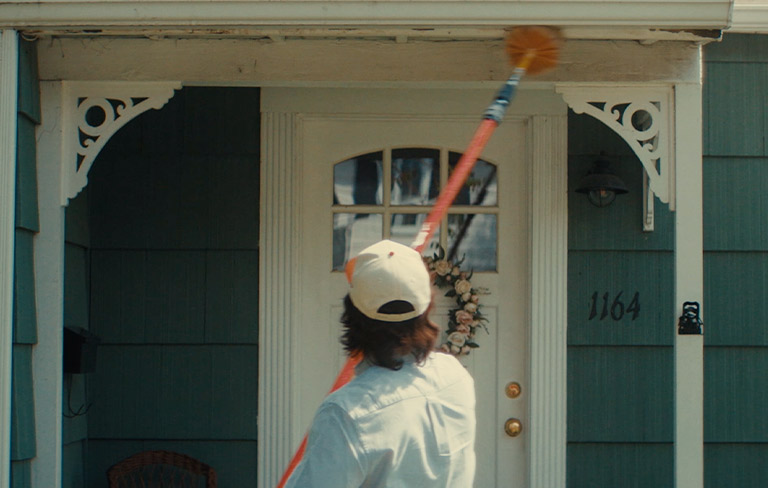
Webs and nests come down, the foundation and key areas get treated, entry points are addressed, and the interior is treated as needed.

PROVE
Before leaving, your technician recaps the visit. Afterward, you get a video of the service, backed by our Worry-Free Guarantee.
FREQUENTLY ASKED QUESTIONS
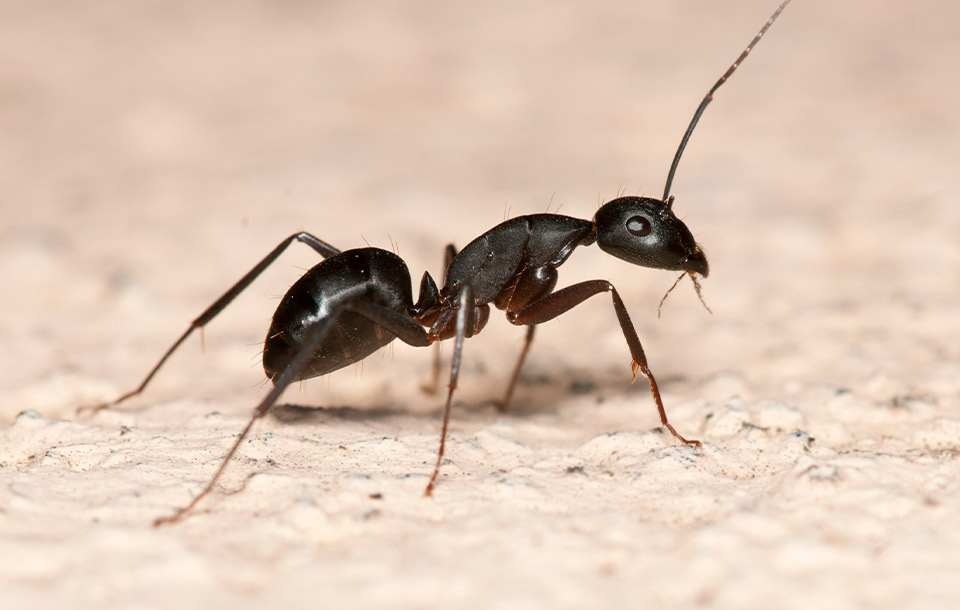
The damage tells you. Carpenter ants tunnel smooth, clean galleries and push the shavings out, leaving small piles that look like sawdust. Termites eat the wood itself and leave galleries packed with mud and soil. The insects differ too: carpenter ants have a pinched waist and bent antennae, while termites are straight-sided with straight antennae. Your technician can tell you which you have, and it matters, because the treatments aren’t the same.
No, and that surprises people. They excavate it to make room for the nest and push the shavings out as they go, like a contractor hauling debris to the curb. That’s why you find sawdust rather than missing wood, and why the damage builds quietly over time.
Two reasons. Spraying the workers you see barely touches a colony living inside your walls. And carpenter ants eat too many different things for bait alone to do the job, which is why the approach that works on kitchen ants falls short here.
Carpenter ant colonies take several weeks to fully eliminate, because the treatment has to reach the workers you don’t see, the brood, and the queen. Activity can taper, pause, and pick back up before it finally stops. What you want is a downward trend, not an overnight silence.
Usually in two places, which is the frustrating part. The parent colony sits outdoors in a stump, a woodpile, or a dead limb, while a satellite colony settles into your walls. Sawdust piles, a faint rustle behind the drywall at night, and ants running the same route after dark are the trail your technician follows.
Fix the water first. Damp wood is what drew them, so a leaking gutter, a dripping pipe, or rotted trim will invite the next colony just as reliably. Move firewood away from the house, trim branches off the roofline, and let regular service keep a barrier between the yard and your walls.
GET STARTED TODAY!
GET A FREE QUOTE
Sawdust where sawdust shouldn’t be? Tell us a little about your property, and we’ll send a free, no-obligation quote. No hidden fees, no confusing contracts, just a clear price for your home. Fill out the form, and we’ll take it from there.