
EARWIG CONTROL
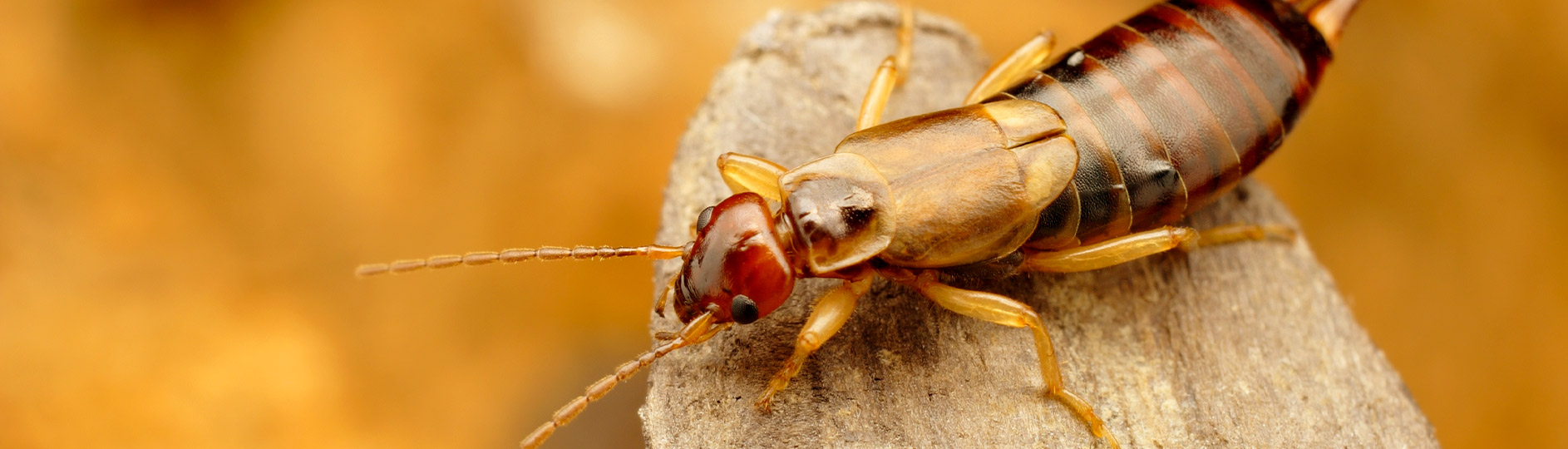
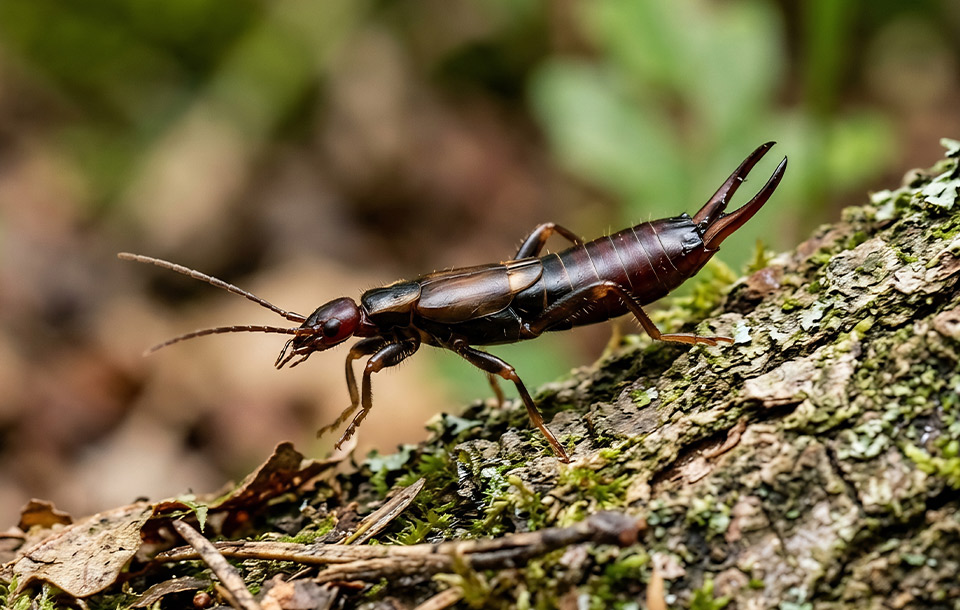
The old myth isn’t true: earwigs don’t crawl into ears. What they do is live in damp places, come out at night, and turn up in the last spot you want them. Those pincers look worse than they are. The real nuisance is how many of them show up at once when conditions are right.
EARWIG CONTROL,
DONE THE NINEFOLD WAY
- We start where they live: Earwigs gather under mulch, stone, flowerpots, and anything flat and damp against the house. That’s where the population builds, so that’s where treatment starts.
- We find what’s holding water: Clogged gutters, poor drainage, and soggy ground along the foundation are what let their numbers grow. Your technician points out what’s keeping it wet.
- We close their way in: Earwigs come in under doors and through foundation gaps, and they climb, so window frames, vents, and balcony doors count too. Treatments go along those entry points and the baseboards they travel once inside.
WHY EARWIGS COME INSIDE
Their cover dried out: Earwigs spend the day in damp ground cover outside. When a hot stretch dries it out, they move toward the nearest reliable moisture, and your foundation is the closest thing to it.
It rained too much: Heavy rain works the other way and floods them out of the same spots. Either extreme sends them looking, which is why earwigs show up in waves.
They climb: Earwigs aren’t limited to the ground floor. They’ll scale siding and brick and get in through window frames, vents, and balcony doors, even in apartments and townhomes.
HOW IT WORKS

INSPECT
Your technician starts with a conversation, then walks your property to find activity, entry points, and risks worth watching.

PROTECT
Webs and nests come down, the foundation and key areas get treated, entry points are addressed, and the interior is treated as needed.

PROVE
Before leaving, your technician recaps the visit. Afterward, you get a video of the service, backed by our Worry-Free Guarantee.
FREQUENTLY ASKED QUESTIONS
Reduce the moisture and seal the gaps, and you’ll cut down what gets in. What frustrates people is that traps and sprays only handle the earwigs already inside, so the supply keeps arriving. The population itself is outdoors, and until it’s treated at the source, you’re emptying a boat instead of plugging the hole.
They pinch, and only if they’re handled or feel cornered. The pincers are for defense and for grabbing food, not for attacking people, and they’re usually not strong enough to break skin. If one does pinch you, it’s about the same as a scratch and needs nothing more than soap and water.
No. They aren’t venomous, they don’t spread disease, and they don’t damage your home’s structure. The worst of it is the smell: a crushed or frightened earwig gives off a yellowish-brown fluid with an unpleasant odor. In large numbers, they’ll chew on paper, cardboard, and natural fabrics, and they can do real damage to garden plants.
Weather. Earwig numbers explode during wet, mild stretches, and both extremes push them indoors: a dry spell sends them looking for moisture, and heavy rain floods them out of their hiding spots. That’s why the numbers seem to spike overnight.
Because the population outside doesn’t stay on the ground. Earwigs are capable climbers, and an upper-floor apartment is no barrier once they start working their way up a wall. That’s why treating your unit alone rarely helps. The source is usually somewhere below you or in a neighboring unit, and the building exterior is what needs the attention.
GET STARTED TODAY!
GET A FREE QUOTE
Finding earwigs faster than you can sweep them up? Tell us a little about your property, and we’ll send a free, no-obligation quote. No hidden fees, no confusing contracts, just a clear price for your home. Fill out the form, and we’ll take it from there.